Powered By Blogger

Wednesday, 29 August 2012

Bay bolete, Xerocomus badius

A personnel favourite, and would put it up there with the cep, the taste is great but the main reason I favour it is that it suffers much much less from larvae infestation and slug attacks, the squirrels have a taste for it though so there will be a few bite marks about.

What to observe.
the cap.chestnut brown and smooth,suede like when young, grows up to 10-12cm
the tubes. off white,yellow to green with age.
the stem. pale brown-reddish,thin often curved at the base and can be quite long.
the flesh. whitish flesh turning slightly blue when cut.
the taste/smell. mushroomy,nutty.
the habitat.coniferous spruce and pine forest.


A young Baybolete,with soft cap.

Note; the cap has actually exploded of this one, after a spell of
dry weather, followed by heavy rain the soakage of water
causes the stems of some bolete (which are quite tough) to split where they meet the cap, popping it off.

One with an elongated stem
having grown through moss.


Phallus impudicus, Stinkhorn


Most often you'll smell these before you see them, they grow in all types of woodland settings and where you have them they'll be in abundance. They are edible ( tasted mossy) but only in the first stage of growth once they start to mature stay clear.They start out like an egg covered in a mucus and membrane before developing to their phallic state, there are a couple of varieties,including the Dictyophora duplicata ( Netted Stinkhorn) though restricted to the Southern Hemisphere with a net like veil below the cap and the Mutinus caninus (Dog Stinkhorn) pinkcapped.
Enough said the pictures will do.

the edible stage, to eat clean off the membrane and the gel like mucus, slice and pan fry

starting to mature, no smell yet


mature, at this stage they start to stink and attract the flies


past it's personnel best,
though a good time to observe it's honeycomb structure


Monday, 20 August 2012

Spuds for National Potato Day

Urban garden. Our spuds grew quite happily and blight free in containers in the yard this year, we have Charlotte and Roosters, planted for educational purposes, true we won't yield a tonne of them, but we will have created a food memory and will be able to say in kid-like talk 'Remember the one time', which is about holistic as it can get really.Once is enough to spark that moment of experience of sowing, growing and harvesting your own produce, and potatoes deliver the goods especially when grown in the yard as they can be 'hoked' up washed and in the pot cooking within minutes.


Country living, I've lot's of previous convictions on the charge of spud liking. At an early age they, apart from being staple diet, were an important source of income through long summer days to icey cold starts in late october. Gathering spuds was always good craic, it was our 'Vendange' and allsorts met on the field and your tally of bags or boxes a competitive count off at all stages of the day. Cash at the end of the day or week was the reward,and usually spent on new clothes.

I was lucky in my later teenage years to get a mix of the work involved with potato production through my uncle Bernie and cousins the Henry family. From planting and gathering to the final bagging for sale to the merchant: a four person job; one graping the stored potatoes onto the riddle for sorting {the riddle had different sized grade settings for market preferences} two at the riddle removing any bad spuds {this was the most important bit as the merchant would pre-order a couple of tonnes and, at any point of loading the lorry, untie a bag to check the spuds. If he was unhappy with the grade then that was it,all would be rejected, off loaded and the riddling process would have to be redone. That would have been Soul destroying!} and one person removing tying, stacking and replacing the bags as they filled. As the day went on and you tired, the target set for the day became a killer. By evening I was glad when the end arrived.

Hard work but satisfying and rewarding, with the warmth of the aunt Sarah's kitchen, a pot of stew and a steaming plate of spuds with fresh baked soda bread, a weekend bake of tart, cake and buns by the range. I'd just started a catering course at that point and for my benefit aunt Sarah would offer comment on the latest bakes, noting a particular batch of pastry being short on texture or crust on a bread having got caught out on the vagaries of the 'Aga'. That was an education in baking for me and a bonus to the happiness of a job well done round the table, cash on the nose for me and disco time later.


Thursday, 2 August 2012

Blueberries with Indian Meal Slim cakes.

My mother used to make
yellowmeal or Indianmeal soda farls, they were drier and grainy unlike the regular soft farl she'd make and to be honest I was a picky eater then and didn't bother with them or the trend of marrow jam at the time either. I'd have one now though, hot from the griddle with a spoon of blueberry jam on the melting butter.

People are familiar with ground corn as a starch in the form of Polenta, still it's not always a favourite on the menu,making it palatable is the task. A small amount either set and grilled with parmesan is alright or 'wet' as a mop up to a ragu of strong flavours help it.

Indian meal,much maligned as a Famine food here in Ireland when it was brought in as a relief food and on it's own it would have been hard to eat, the fact that it isn't very nutritious didn't help either, and that there was good flour being shipped out of the country was part of the crime earning it the low esteem that it has held.
Back from the Dublin/Wicklow mountains picking fraughans/blaeberries/bilberries/myrtilles/blueberries I have a blueberry polenta cake in mind,but for a simple quick reward now, I retreat to a great Irish staple 'a bit of soda'
As opposed to the tradtional soda farl recipe from an earlier blog post, this one will be based on a 'Slims cake' recipe sweet and rich with butter and sugar in the mix.

Indian Meal 'Slims' Cakes
Ingredients, makes 3 scones
5 oz 142gms self raising flour
5 oz 142gms fine polenta, maize/cornmeal.
2oz 56gms butter
1 oz 28gms sugar
Pinch salt
120gms Buttermilk

Method
Sieve the flour into a bowl add the polenta/cornmeal and sugar cut the buter into small cubes add to thOoe dry ingredient and rub it in, add the butermilk use a flat blade,and mix to a paste. Knead lightly on a floured board press or roll out thinly.
Bake on a hot griddle or heavy based pan.
serve warm with butter and some fraughan/blueberry jam.

nb. If you have an Indian foodstore near you buy their coarse ground cornmeal, it's cheaper than the 'chic' polenta.


Monday, 30 July 2012

Splitting the Autumn!

A Irish Summer Truffle


Time managements crucial, come Autumn the black hole of Winter looms and concern
goes to the store cupboard that needs to be filled, so finding moody mushrooms, gathering a mass of berries and the small matter of time for fishing has to be exacted.
Last year we managed to maintain a 'Wild Food Menu' for a week,this time round
we'd like to repeat that, for a month, it'll be our 'October Festival'.
The format is simple each dish on the menu has a wild food component foraged by us.Nature will provide as long as conditions are favourable, days off need to coincide with the right weather conditions, weather vagaries count, thankfully in work the guys don't mind a day or two in the woods gathering up commands, so somebody will be off when the time is right- we hope.

We haven't set the menu in stone at the moment but preparations are under-way. Derek the sous-chef apart from his Blackberry and Elderberry picking detail will come up with pretty presentations and recipe ideas of our harvest.


A few of Spring and Summers goodies have already been carefully prepared and stored to be paired up with local Irish produce for our Menu.


Some of the things we have.Honeysuckle syrup waiting to be married up with Crab apples for a 'Double Amber' jelly. The Elder-flowers are now cordial and ready to infuse a parfait perhaps with a hot sauce of Elderberries. Last years Sloes aged in pale sherry to make sauce for Mallard are on the bill.We have started collecting Wild Fennel pollen to dust a sustainable Irish Fish, Common Poppy and Rose petals to colour and flavour Lisa's Turkish Delights.


What else will we have?


Fraughans, after much combing of the Dublin/Wicklow hills
Emily, Evan and Tom will hope to make a Bavarois, or Fruit Leather with their Juices.Naturally Mushrooms will feature fresh,dried and pickled, all able to stand on their own or with a starch to back them up. Seaweed gathered by our friends from Connemara on the west coast for butter, a salad or added to our home-made bread. Wild Greens will be complemented by herbs from our urban garden.


Shaggy inkcap, Wood Sorrel, Picked and peeled by Lisa and Joanna.


Thursday, 12 July 2012

Shaggy ink caps- pop up mushrooms


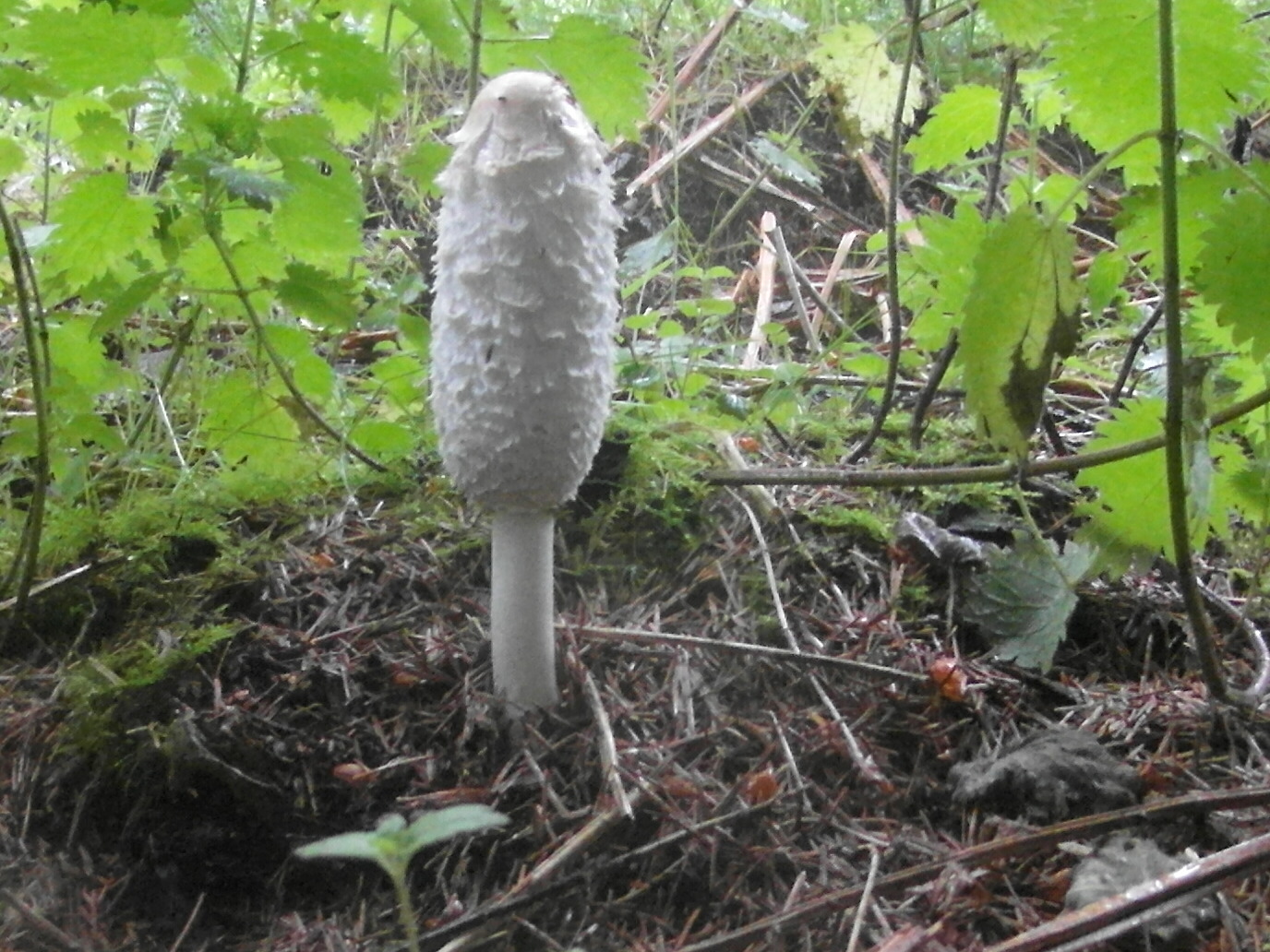
Shaggy Ink Cap, Coprinus comatus, Lawyer's wig, Shaggy mane.
This fragile little guy pops up that fast you have to be quick to get them when they're small or you'll be using them like squid ink to colour a risotto or dramatic sauce.
They are remarkable in the way that they can push their way up through rough asphalt, it's this urban habitat that can be their saviour from the forager as they frequent the parks and road verges, and one must consider our spew of pollutants before deciding whether or not to add them to the pot. Best picked when they are thumb size and the gills are still white or just turning pink. These don't keep long so eat as soon as possible after pickng or they will mature into a puddle of ink.
The other important thing to note is that they don't react well when consumed of alcohol. causes nausea,stomach cramps and palpitations. Use a 24hr period as a rule. This aplies to the ink cap family, Common Ink Cap, Coprinus atramentarius
Glistening Ink Cap Coprinus micaceus, and the Coprinus disseminatus (Non Inky Coprinus) whose gills don't dissolve with age.

What to look for.
Cap. Cylindrical becoming bell shaped, scaly.
Gills. White when young, turning pink through to black~at this stage they start to disolve.
Stem. White,free moving ring up to 20cm in hieght, 1-1.5cm diameter
Spores. Black
Habitat. Greens, lawns, roadside/path verges.
These have a great flavour enjoy fried with breakfast, or made into a rich soup.

pod-cast of the the day I ran into Louis Smith up in Wicklow 
http://www.rte.ie/podcasts/2012/pc/pod-v-30071214m57srecipes8mushrooms-pid0-897888_audio.mp3

Monday, 2 July 2012

'Slippery jacks' Suillus luteus

Slippery Jacks, Suillus luteus


Slippery jacks 'pinheads'

A member of the Boletus family that have sponge like tubes under the cap where one would normally expect to find gills.
Found in abundance easy to identify and makes for easy pickings, the downsides are they're slightly labourious as you need to peel them and discard the slimy skin,hence the title 'Slippery jacks' best if you can pick them small and on a dry day for immediate use,or bottling up for winter treats, peel and thinly slice the larger ones for drying. The slugs get to them quickly as well usually attacking the sponge first.Slippery jacks do soak up a lot of water in moist conditions however I always give them a quick rinse before proceeding to use them as i do with most of the mushrooms I use, especially chanterelles. They are mycorrhizzal enjoying relationships with spruce conifers and pine.Depending on the season they can found towards the end of June through to August.

Slippery jack, Suillus luteus
What to observe.
Cap. Up to 12cm brown yellowish brown
Gills. Sponge small tubes pale yellow darkening with age.
Spores. Pale yellow.
Stem. Thick fibrous yellowish. browning with a ring veil.
Smell. Pleasantly sweet and fruity
Habitat. Pines, Spruces.